A new current is in the process of inscribing itself into the practice of so-called Contemporary Music. It shows us that there can be new spaces, new dispositifs, new practices. It comes from the outside — and at the same time from within. It is defiant, technically skilled, nerdy, non-academic, radically specialized. It strikes a nerve within Contemporary Music and thus has the potential to fill it with neo-new life.
“Neo Contemporary Music” is, of course, a deliberately tautological stumbling block — in reference to what is known as “neo-classical” music: music that plays with elements of classical and contemporary composition but dresses them in friendly, ambient-saturated garments. A bit of piano, a bit of reverb, synthesizer arpeggiator, a bit of string drone — and the Spotify-compatible soundtrack is complete.
Neo Contemporary Music, by contrast, pursues the opposite direction of neo-classical music. It uses progressive sound means — but those that have matured over years in nerdy spaces within sometimes radical practices. It is not aimed at audience response, but draws its strength from enthusiasm for its own intrinsic music-theoretical, technological, or instrumental obsessions. It is not calculating but, in the best sense, self-loving.
What becomes visible and audible here is not a style but the result of intensive exchange within global digital networks. A loose association of musicians, thinkers, and listeners who share a desire for musical experimentation — on festivals, in podcasts, on Discord servers, on NTS or Cashmere Radio.
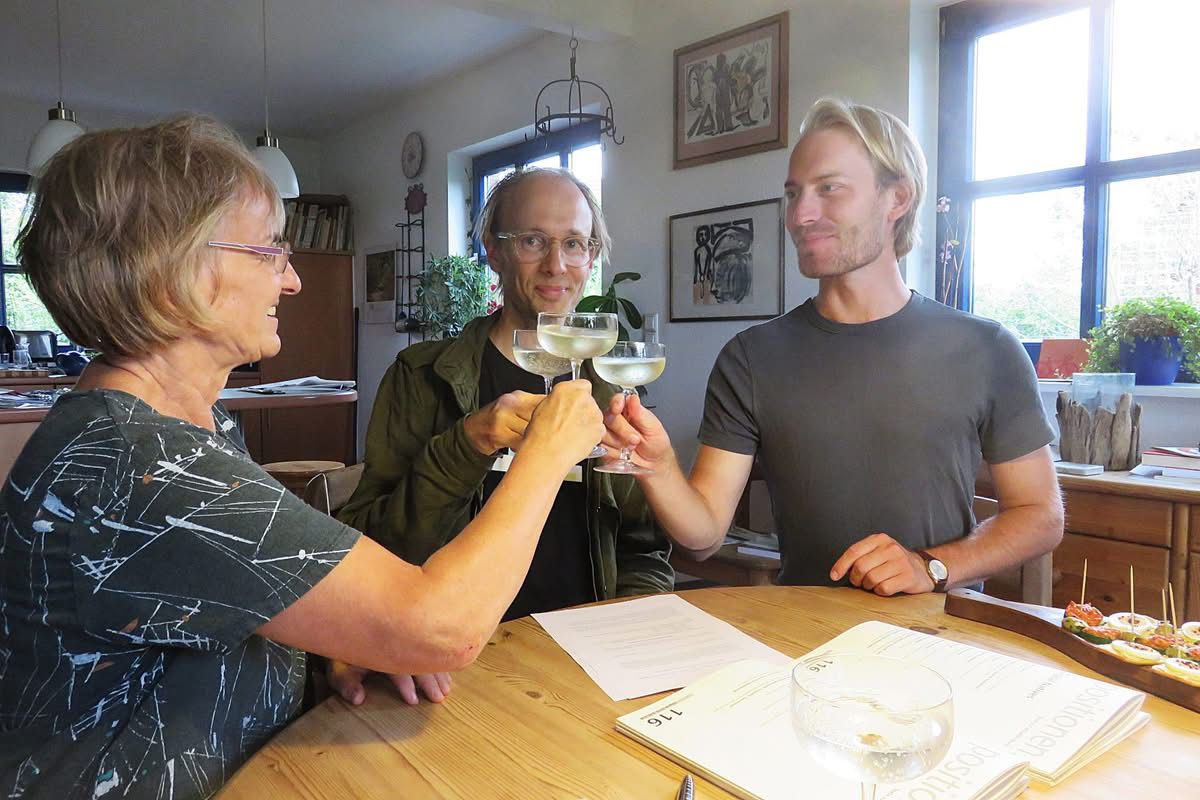
This issue #144 of Positionen is devoted to the particular current of xenharmonic music, in which it becomes apparent how, in internet spaces, a once niche interest in tuning systems has grown into an increasingly vast, experimental musical landscape spanning countless genres — an example of the specific new conditions from which Neo Contemporary Music emerges.
Neo Contemporary Music has nothing to do with the watered-down simulations of techno, jazz, or metal that are sometimes packaged for the New Music audience. Rather, it is characterized by the self-confident presence of musicians who know exactly what they are doing — and who often have a deeper understanding of electronic sound research or microtonal theory than many a composition professor or institution.
This new expertise no longer develops exclusively within universities, but on Discord, in podcasts, at festivals, and in idiosyncratic radio shows. It is not institutionally secured, but it is highly specialized. Figures who were once stylistically formative within their own subcultures — such as Stephen O’Malley, Kali Malone, or Hainbach — suddenly appear in Contemporary Music concert series by Ensemble Contrechamps, the GRM, or Ensemble Recherche.
What is especially intriguing is that not only within Contemporary Music is interest growing in these “authentic,” more non-academic positions, but also that stylistically heterogeneous festivals and radio programs suddenly show an increased openness toward Contemporary Music.
At the Fusion Festival, originally rooted in the Goa scene, musicians such as Ute Wassermann, Robyn Schulikowsky, and most recently the Zafraan Ensemble with my piece Terroir have been invited in recent years. On the London radio station NTS 1, one can hear electronica, pop, sound tinkering, ambient, and Contemporary Music in an organic flow.
It’s been a while since the oboe multiphonic compositions in the style of Claus-Steffen Mahnkopf were considered the epitome — and endpoint — of instrumental differentiation. By the mid-2000s, they had become the “final boss” in debates about the “state of material”: radical, hermetic, brittle, hard to listen to.
After that, the focus of New Music increasingly shifted toward performative formats, conceptual art, text, and theory. The classical notion of “material” — the old promise of securing newness through advanced sounds — receded into the background. Sound as spectacle was played out. The craft of orchestration for larger ensembles continued to be celebrated mostly within the more conservative, French-influenced branches of Contemporary Music.
In September 2024, I am sitting in Eupen, eastern Belgium, at the closing concert of the Meakusma festival. Lucas de Clerk plays for a good hour and a half in circular breathing on a double-reed aulos shawm, producing screaming multiphonics. The honking, squealing, and beating difference tones go straight through the bones. Claus-Steffen Mahnkopf, hold my beer.
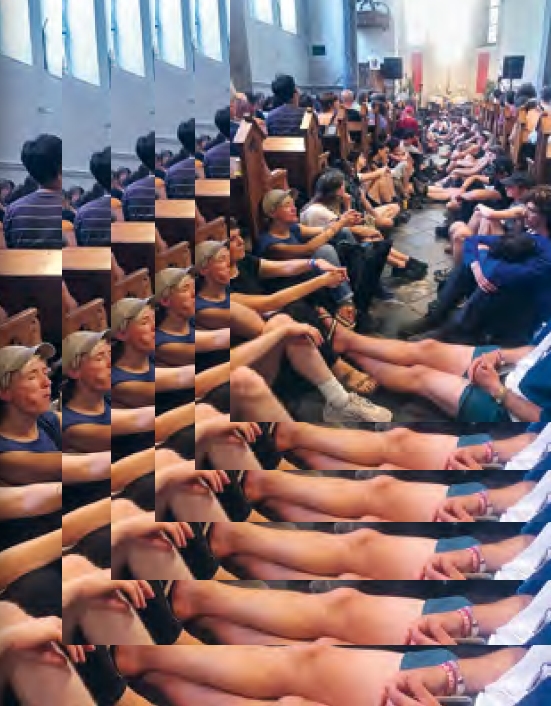
The audience, half seated, half lying on beanbags across the large hall, listens intently — visibly enjoying these extreme assaults on the auditory system. There is frenzied applause.
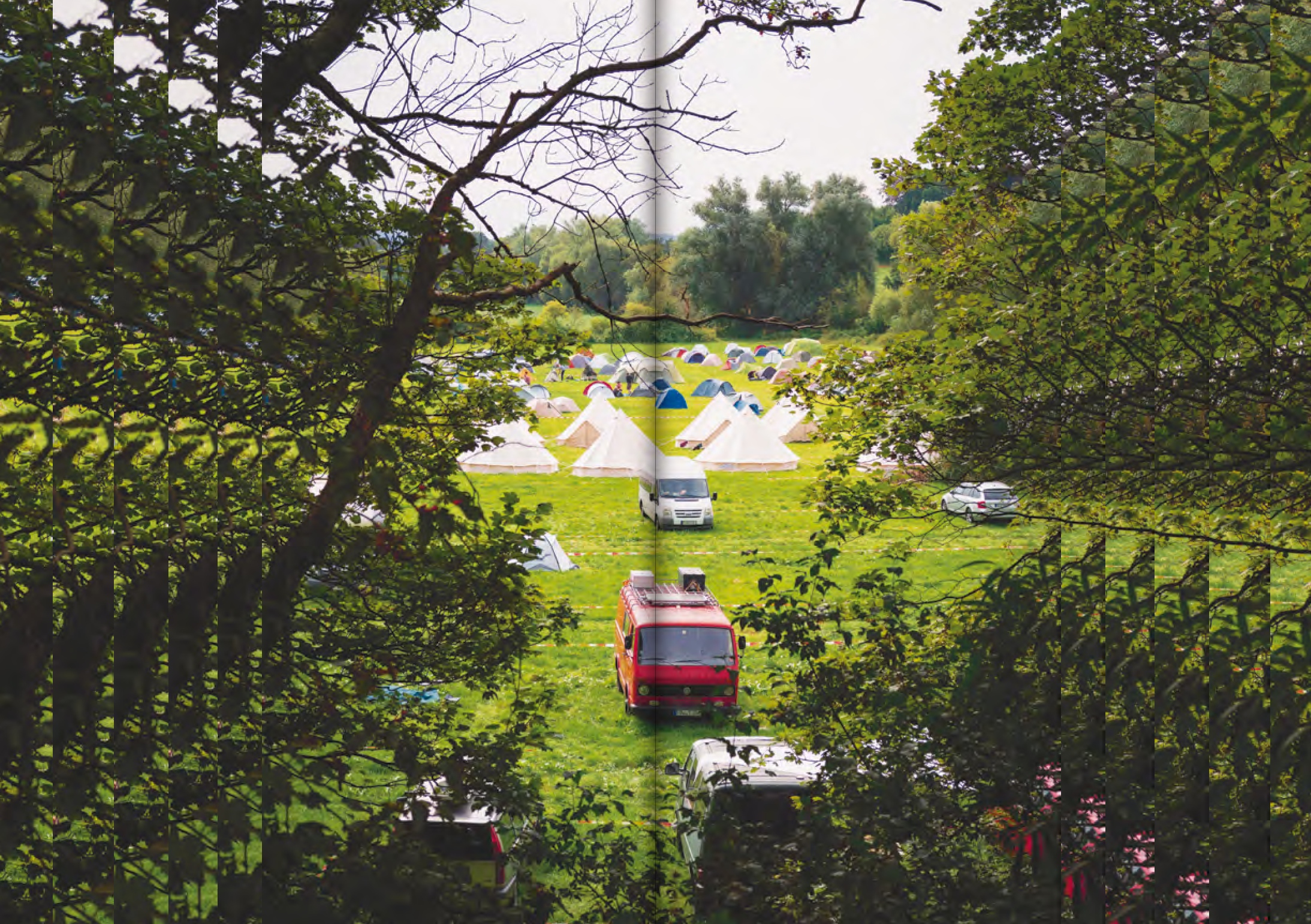
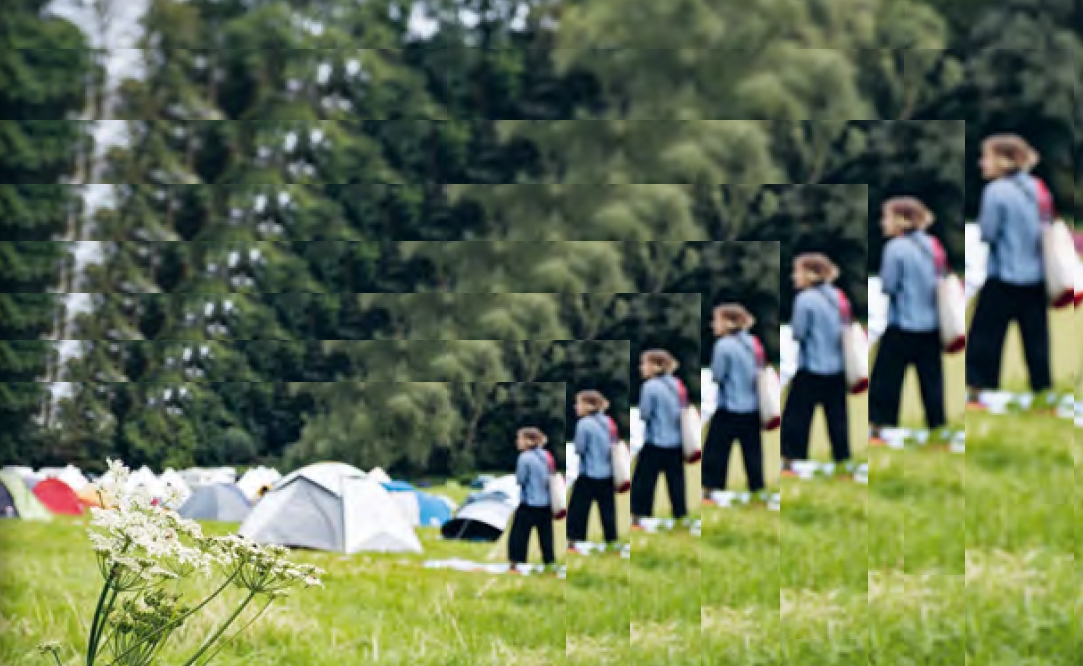
Behind me and the other visitors — most of whom are camping in tents on the large festival grounds — lie four days of concerts: conceptual vinyl sets, live electronic bricolage, sound installations, synthesizer jazz, West African acousmatics, Belgian hardcore, performances, Contemporary Music, gamelan music, the New Wave band FSK, and even post-ironic pop from Weimar.
After a string quartet by Lea Bertucci, the British psychedelic band Melos Kalpa performs. Coming from the blazing dance floor for experimental beats, I find myself in a cool, wood-paneled community hall where a spectral piece for clarinet, harpsichord, and cello is performed.
It takes my body a while to readjust to the — supposedly well-ingrained — norm that one does not usually move much to music in this context. Or why not, actually?
Later, in the city center, I wander between a picturesque beer garden and a bakery with German and French pastries into a soundwalk that leads me into a quiet park. There, two teenagers on two white horses ride past us at the exact musical moment, greeting simultaneously with their cowboy hats. It’s a bit kitschy, but also very sweet and somehow otherworldly in how it’s embedded in urban life.
Even more atmospheric is what follows at the Eupen Plaza — a “Belgian ugly building,” an unfinished, and therefore brutalist, shopping mall. In the completely dark main hall, three self-playing church organs shimmer and perform meandering patterns and glissandi — a sound installation by organist Maxime Denuc and stage designer Kris Verdonck. Ghostly and wonderfully strange.
It has been a long time since I last attended the Witten Days for New Chamber Music. For the final day of the 2025 festival, I travel to the Ruhr region and arrive on Sunday morning at a moderated concert for string quartet.
The experience there is completely different. The moderator asks questions whose harmlessness and banality send whole brains into sleep mode.
“All those good questions” — the poor composer must somehow find her way back to the safe terrain of politeness. The conversation revolves around cooking and rehearsing on a Canadian island. The string quartet looks like a quarrel quartet; the facial expressions betray bad moods.
I cannot tell whether the sluggishness of the music to follow is inherent to the piece or due to its sulky, charisma-deprived performance. By chance, I am seated diagonally behind the festival director — who is idly gaming on his phone.
In the final afternoon concert, there seems to have been an attempt at balance between more droning, static experiments and a classically crafted sound.
It feels as if a long-gone era of French, post-spectralist orchestration is still being invoked.
There’s respectful applause in recognition of craftsmanship — but is anyone truly moved?
Johannes Kreidler asks whether I’ll stay for the reception afterwards. One of the speakers reads his speech aloud, buried in his manuscript. The festival, he declares, has been an incredible success — he can tell immediately from the radiant faces in front of him. The hall empties out further and further. Even the oversized buffet of ham sandwiches behind the barrier can’t change that.
Of course, this is a polemical exaggeration — a snapshot. Yet the feeling of wasted potential is real and saddening — especially knowing that at festivals like Meakusma, Unsound, Sanatorium of Sound, Alarme!, and many others, a diverse, younger audience eagerly embraces the experimental, the offbeat, the extreme, and also Contemporary Music itself. In other words: demand exists.
Here in Witten, everything fits a little too neatly into the twilight of New Music — into funding cuts, demotivation, and the anticipation of a reactionary turn.
I imagine myself as a committed cultural policymaker who skipped Sunday breakfast with the family to see what wonderful things are being done with public funds for contemporary music – and who, by late afternoon, begins to wonder whether this really is a meaningful expenditure…
Would the integration of what I call Neo Contemporary Music mean the gradual end of New Music as we have known it — its slow dissolution through attention-economy-driven formats on YouTube, TikTok, or Discord? Certainly not. On the contrary: what we have witnessed in recent years is not decay but expansion – the opening of new spaces. The integration of non-academic musical specialists brings fresh thinking, new practices, and new contexts – but it does not erase what New Music has built over decades.
What remains is a unique perspective on sound, on form, on thinking in and about music.
Composers work differently, think differently, listen differently. That is a distinctive trait.
Even in the music of Sunn O))), Hainbach, or Kali Malone, many things are missing that can only emerge from compositional practice: structural dislocations, microformal finesse, radical questioning, or simply a basic grasp of music theory beyond atmosphere and special sound.
Above all: Contemporary Music does not need to make itself more “accessible” to remain relevant. On the contrary – it should become more radical, show what radicality it already has.
It is not musical challenge that drives audiences away, but rather the mode of presentation: the chamber-music setting with church chairs, the too homogeneous or tepid programming. Public broadcasters and festivals should move away from the neo-classical logic of calculating content – and toward more self-love, as found in Neo Contemporary Music. Its camp is larger than that of the remaining classical listeners who “also appreciate New Music.”
At a New Music festival in Aachen, where the curator also tried to design a not-too-demanding program (“the people of Aachen are rather conservative”), she was surprised by the high attendance at a concert by Ute Wassermann, “even though it was very experimental.”
I want to scream. Yes! No! Exactly!
What distinguishes old Contemporary Music are its particular forms of reflection and execution — its ability for analytical self-observation in listening, for deliberate formal rupture, for aesthetic friction. To say this is not self-affirmation but simply the expectation I encounter when speaking with Neo Contemporary Musicians: “You know things we don’t know. That’s exciting.” Hainbach may be deeply familiar with how the microtonal instrument Ondolina functions, yet had little engagement with Scelsi’s specific working methods.
One final impression I take from Meakusma: one could truly believe that the selection here was made solely and thoroughly on the basis of musical quality — aside from a few lovingly included local acts. Contemporary Music, too, could be organized less along academic and institutional power logics. A glance at the Fusion Festival, for instance, shows how different structures can be built: with open calls, no stars or headliners, no sponsors, and explicitly anti-fascist.
This article was originally published in Positionen issue #144